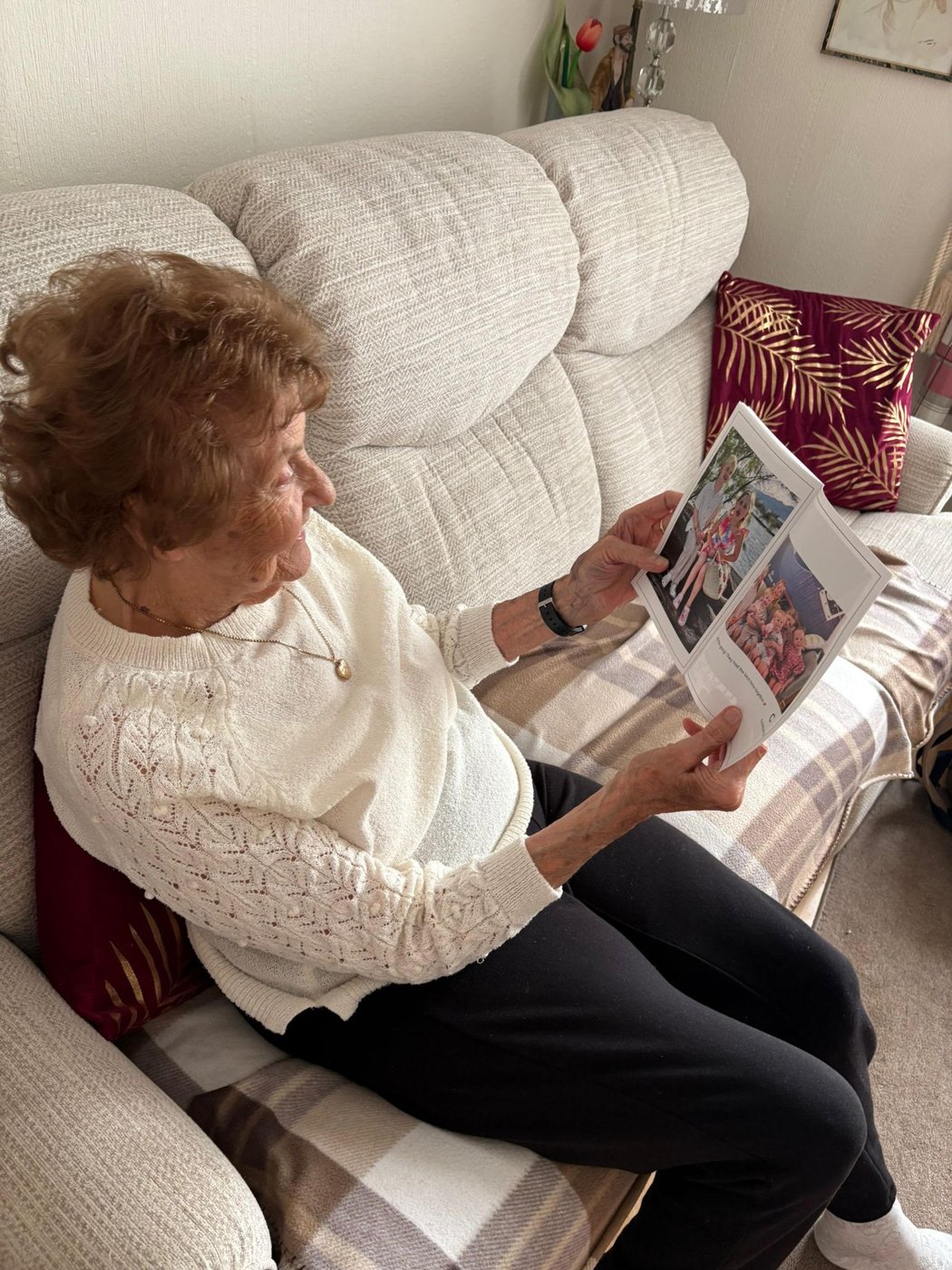
Written by Sam. I run Taletrove, which is a service that does this for families, so I have an interest. Most of this page is about doing it yourself, because plenty of people should, and I have tried to be useful rather than salesy about it.
Why the family news stopped reaching them
It is almost never deliberate. The family news moved into a WhatsApp group, the group works beautifully, and one person was never in it. Nobody decided to leave Mum out. The conversation simply moved to a room she is not in.
You notice it on the phone. She asks about something that happened six weeks ago, or she has not heard that the baby started walking, and you realise everyone else found out on a Tuesday afternoon in a group chat.
A printed newsletter fixes that, and it does not need her to learn anything. Here is how to put one together.
What to actually put in it
The instinct is to save it for big news. Resist that. Big news gets phoned through anyway. What people miss is the small stuff, and the small stuff is what makes someone feel part of a family rather than updated by one.
Things worth including:
- Ordinary photographs. The dog in the garden. Someone's dinner. A bad haircut. These land far better than posed ones.
- What the children have been up to. School, football, a lost tooth, a drawing. Photograph the drawing, do not describe it.
- Dull domestic news. A new fence, a car that failed its MOT, what you are growing. It gives them something to ask about.
- Things coming up. A holiday, a birthday, a visit. Something to look forward to is half the value.
- A line from each person. Even one sentence each, so it reads like the family and not like one person reporting on it.
A short caption under each photo does more work than a page of writing. "Tom's first day in Year 3, still not keen" tells them everything.
Laying it out so it is genuinely easy to read
This is the part most homemade newsletters get wrong, and it is the easiest to fix.
- Print it bigger than feels necessary. A4 rather than A5. Body text at 14 to 16 point, not 11. If you are in any doubt, go larger.
- Dark text on plain white or cream. No photographs behind text, no pale grey, no coloured backgrounds. Contrast matters more than style.
- A plain font. Arial, Verdana, Calibri. Nothing handwritten or decorative, however nice it looks on screen.
- Fewer, larger photos. Four big pictures beat twelve small ones. A photo the size of a stamp is no use to anyone with ageing eyes.
- Name everybody. Put names under faces, every single time. Grandchildren change fast and cousins are hard to tell apart.
- Leave white space. A cramped page is tiring. Let it breathe.
If their eyesight is poor, ask. People are often more willing to say "I can't read that" about a font size than about anything else.
See it for yourself
What actually arrives through the door
A real printed edition, the same booklet we post to families every month.
Read a sample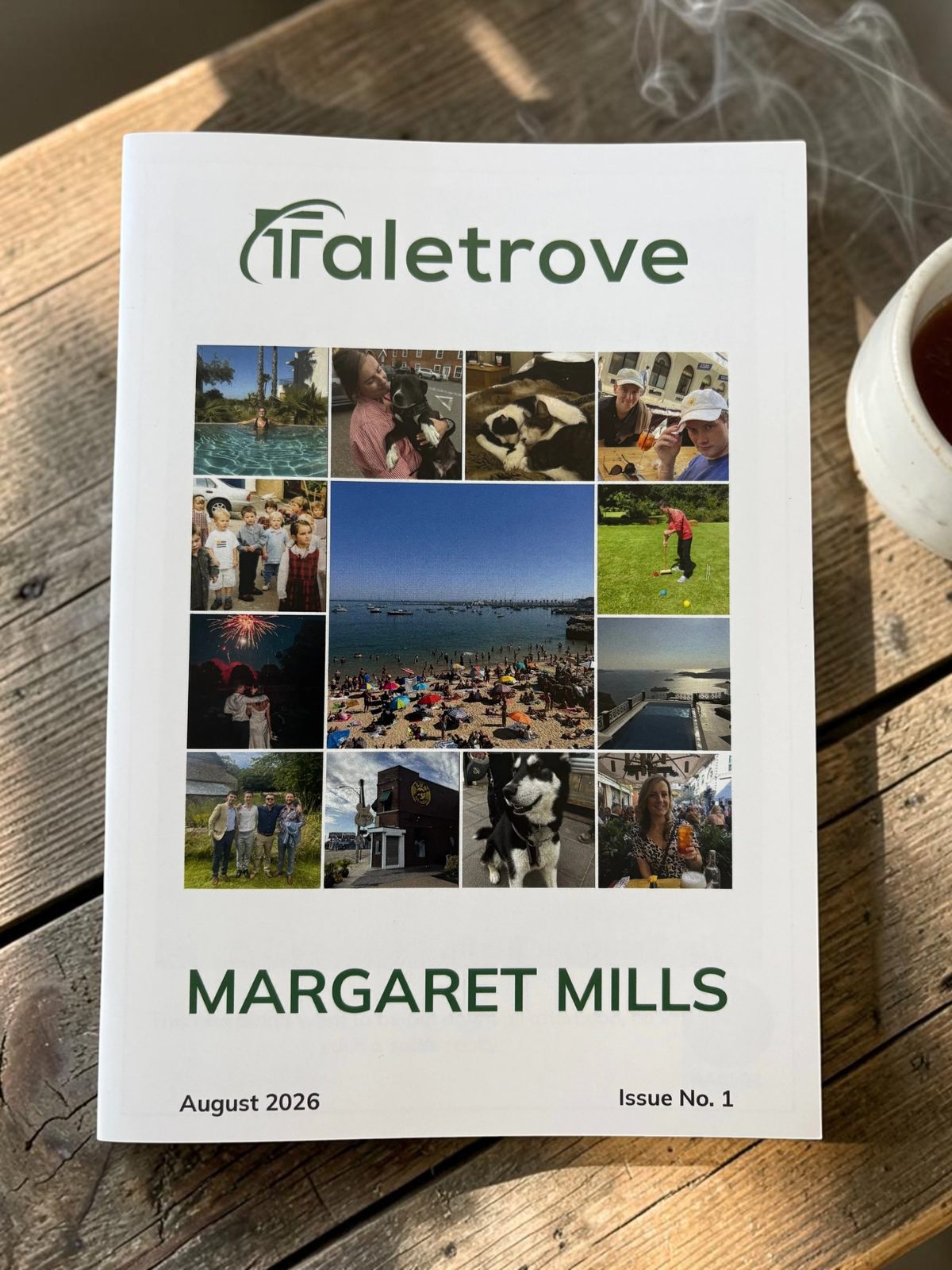
Getting it printed and posted
You do not need anything clever. A Word document, a home printer and a stamp will do it, and a surprising number of families run on exactly that.
If you want it to look like something rather than a printout:
- Photo prints plus a written page. Order prints from Boots, Photobox or Snapfish, write a page to go with them, put the lot in an envelope. Cheap, quick and genuinely lovely to handle.
- A print shop. Any local printer will do a short run of folded A4 booklets for a few pounds. Ask for 100gsm or heavier so it does not feel flimsy.
- Online printers. Fine for quality, though minimum order quantities usually make no sense for one copy a month.
Post it properly. A hand addressed envelope with a real stamp is part of the thing, and it will sit on the mantelpiece in a way a plain window envelope never does.
The bit that actually goes wrong
It is not the design and it is not the printing. It is month two.
The first one is a pleasure to make. You have a year of photographs saved up, you enjoy choosing them, and it takes an evening. The second one is due four weeks later, you have had a bad week at work, and it is the only thing on the list nobody is chasing you for. So it slips to the following month, and then it quietly stops.
That is not a character flaw, it is what happens to every unscheduled monthly task. If you want it to survive, build in the two things that keep it alive:
- A fixed date. Same day every month, in the calendar, with a reminder. Not "when I get a chance".
- More than one person. Ask two or three relatives to send you something by that date. It stops being your job and becomes the family's, and other people's expectations are far better at making you do things than your own.
Set the bar low as well. Four photos and a paragraph posted every month beats a beautiful twelve page edition that happens twice and then never again. Consistency is the entire value here.
If you would rather not do it yourself
Several services do this for families, and they divide into the ones that print and post a newsletter and the ones that only email it. For a relative who is not online, only the printed ones are any use. I have compared the main options, including ours and including where the others win, in the best family newsletter services in the UK.
Taletrove is the one I run. The family send photos and messages into a WhatsApp group through the month, and we turn them into a printed booklet and post it out, in A5 or large print A4. There is no app for anyone to download and nothing for the person receiving it to do. It is £7 a month, £3.50 for the first one.
But if you have read this far and you think you would enjoy making it, make it. It will mean more coming from you, and nothing on this page is hard. Just put the date in the calendar before you forget.
Questions people ask
How often should I send one? Monthly is the natural rhythm and it is what nearly everyone settles on. Quarterly works if the family is quiet. Weekly is too often to sustain and too thin to enjoy.
How long should it be? Four to eight sides of A4. Long enough to sit down with, short enough that you will do it again next month.
What if they live in a care home? Put their room or unit on the envelope and tell the staff it is coming. Care home post gets handed round, which families usually like: it gives residents something to show people.
Should I ask them what they want in it? Yes, and then ignore the answer slightly. Almost everyone says "oh, don't go to any trouble" and then reads it four times and shows it to the district nurse.
Can I include things they have already heard on the phone? Absolutely. Seeing the photograph of the thing you described is not a repeat, it is the point.